Thinking about buying in downtown Bristol? You are not alone. For many buyers, this part of town offers a rare mix of walkability, historic character, waterfront access, and small-town energy that can be hard to find elsewhere in the East Bay. If you are weighing whether downtown Bristol is the right fit, this guide will help you understand what to expect, what to watch for, and how to buy with confidence. Let’s dive in.
Why Buyers Love Downtown Bristol
Downtown Bristol is the historic heart of town and the area that most closely matches a village-style lifestyle. According to Bristol’s draft housing chapter, it has the town’s highest concentration of historic buildings and some of its oldest, densest housing stock. It also includes a wider mix of housing types than many other parts of town.
That variety matters when you are house hunting. In downtown Bristol, you may see single-family homes, two-family and three-family properties, multifamily buildings, and mixed-use buildings. If you want a location where shops, restaurants, the waterfront, and daily errands feel closer at hand, downtown often stands out.
Bristol’s official town profile also describes the community as a seaside town with a vibrant downtown district and convenient access to Providence and Boston. For buyers who want coastal charm with regional connectivity, that is a strong part of the appeal.
What the Market Looks Like
If you are entering the Bristol market, it helps to understand the bigger picture first. Bristol’s draft housing chapter reports that the town’s median home price reached $627,394 in 2024, up from $500,000 in 2023. That jump shows how competitive and in-demand the area has become.
It also helps explain why preparation matters. If you are buying in downtown Bristol, you will want a clear budget, realistic expectations, and a sharp understanding of the tradeoffs between charm and upkeep.
Age is another major part of the story. The same town report says 32.5% of Bristol housing units were built before 1949, and the median home in Bristol was built in 1966. In the downtown core, buyers should especially expect older homes and the maintenance questions that often come with them.
What Homes Look Like Downtown
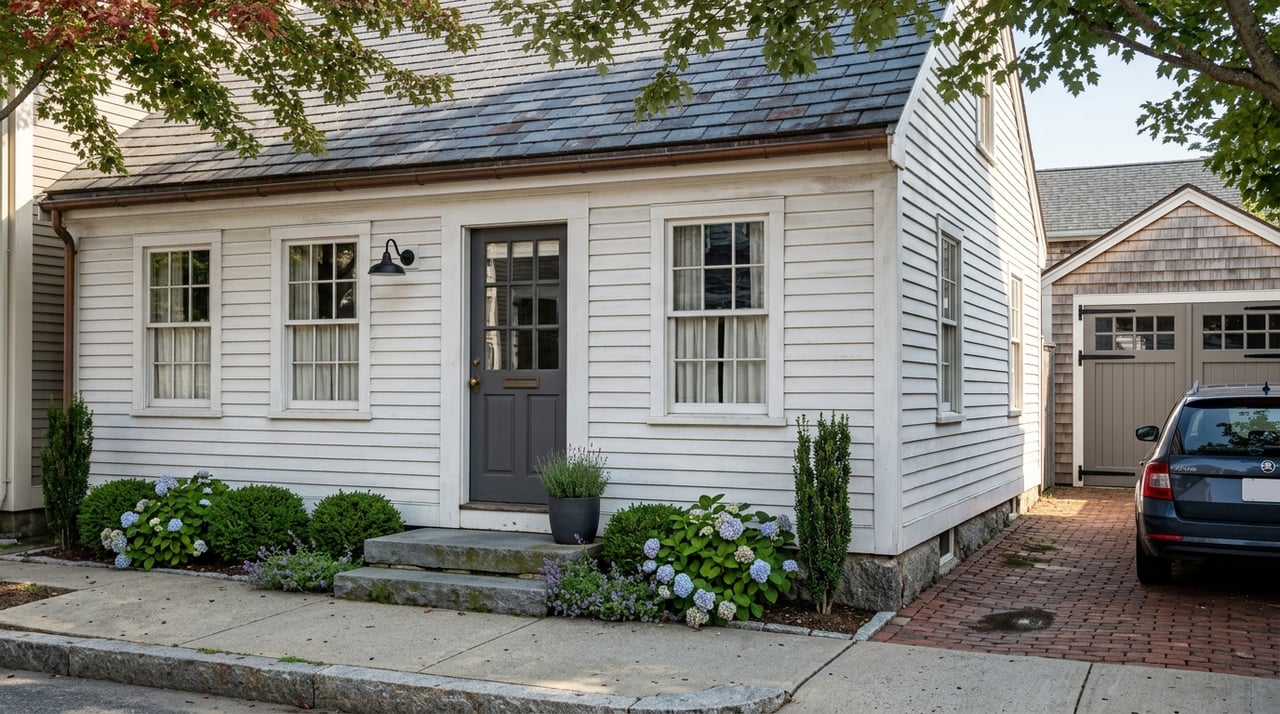
Downtown Bristol does not come with just one signature home style. Instead, you will find a broad New England architectural mix shaped by different periods of development. That variety is part of what makes touring homes here so interesting.
The town’s historic survey ties certain window patterns to certain architectural eras. For example, 6/6 windows are associated with early- to mid-19th-century Federal and Greek Revival homes, while 2/2 windows often appear on mid- to late-19th-century Italianate, Gothic Revival, Second Empire, and Queen Anne homes. 6/6 or 6/1 windows are also linked to early 20th-century Colonial Revival homes.
For you as a buyer, that means details matter. A downtown home may seem simple at first glance, but features like sash profiles, trim, porch columns, brackets, rooflines, dormers, and original siding can tell you a lot about the home’s character and condition.
Features to inspect closely
When touring an older home downtown, pay close attention to exterior elements that often change over time. Bristol’s historic materials point to a few especially important areas:
- Windows
- Porches
- Siding
- Trim
- Chimneys
- Additions
The town’s survey notes that vinyl replacement windows and altered porch details are common changes in the historic district. Siding changes can also cover up original wood details. A home may look tidy and updated, but still come with future repair needs or preservation-related limits that are worth understanding before you buy.
Historic District Rules Matter
One of the biggest things to understand before buying in downtown Bristol is whether the property falls under local historic-district review. Bristol has a formal Historic District Commission, and its role is to review exterior work on properties in the local historic district so changes stay consistent with the property and district character.
The town says 619 properties fall under Historic District Commission jurisdiction, and 35 structures are individually designated for special historical or architectural significance. If a property is in the district, exterior changes can involve a review process that affects your timeline, budget, and renovation plans.
A Certificate of Appropriateness is required before repairs, alterations, new construction, demolition, or moving a structure begins. Interior work is not reviewed by the commission. The town also offers concept review early in the planning process, which can be very helpful if you are considering exterior changes after closing.
What may be exempt or streamlined
Not every exterior project requires the same level of review. Bristol’s Historic District Commission rules say certain items are exempt or streamlined, including:
- Conventional painting
- Landscaping
- Portable window AC units
- Storm windows
- Some in-kind repairs
- Some minor site or equipment items
At the same time, the rules are clear on some important points. Original window sashes should generally be repaired and retained, vinyl or aluminum siding is not considered appropriate on historic buildings, and sandblasting will not be approved. The town also notes that approvals are generally valid for one year.
Zoning and Parcel-Specific Research
Downtown Bristol includes a D (Downtown) zoning district, but you should never assume a parcel’s zoning or historic status based on the block alone. The town’s zoning information makes clear that confirmation should happen at the parcel level.
That is especially important downtown, where one address may have a different set of zoning considerations or historic review requirements than another nearby property. If you are comparing homes, the exact address matters just as much as the neighborhood label.
Flood Due Diligence Is Part of the Process
Because downtown Bristol and the waterfront are closely connected, flood review should be part of your normal due diligence. Bristol’s Flood Zone Information page says the town can help determine whether a property appears to be in a Special Flood Hazard Area, identify the FIRM zone and base flood elevation, and provide FEMA elevation certificates when available.
The town also participates in FEMA’s Community Rating System as a Class 7 community, which helps reduce flood-insurance premiums for policyholders. That can make a difference when you are budgeting for ownership costs.
The town’s historic-district page also references a vulnerability assessment for the Bristol Waterfront Historic District and says periodic flooding in parts of that district is increasing. If you are looking at a low-lying or waterfront parcel, ask detailed questions early about flood-zone status, elevation, and insurance costs.
Parking and Daily Logistics
Parking is one of the biggest lifestyle questions for downtown buyers. Bristol requires parking stickers on designated residential parking streets, and the town’s downtown-related list includes streets such as Church, Court, State, Thames, Franklin, High, and Bradford.
That means parking convenience can vary a lot by address. A charming downtown location may come with tradeoffs around off-street parking, resident stickers, and guest parking, so it is smart to think through your day-to-day routine before making an offer.
The town also offers a State Street/Church Street dock sticker for residents, though overnight parking on the docks is not allowed. Vehicles parked in designated areas without the proper sticker can be tagged, fined, or towed.
The Parade Route Is Part of Downtown Life
If you buy in downtown Bristol, you are also buying into the town’s annual rhythm. The Fourth of July parade has a direct effect on circulation and parking in the downtown area, with a parking ban along the route going into effect the night before the event.
For some buyers, that is part of the fun and character of living downtown. For others, it is an important lifestyle consideration. Either way, it is better to understand it upfront rather than be surprised later.
Walkability and Waterfront Appeal
One reason downtown Bristol stays so appealing is that the location supports a connected, small-town lifestyle. The harbor office notes that town docks are only a short walk from historic shops and restaurants in the heart of Bristol, and it oversees boating activity, waterfront rights-of-way, and parking along the Thames Street waterfront.
The area also benefits from Bristol’s Revolutionary Heritage Byway, a 6-mile route that runs through the historic downtown, waterfront parks, and harbor views. The East Bay Bike Path begins in Bristol and stretches 14.5 miles to Providence. If you value being able to enjoy the waterfront and get around on foot or by bike, these features add real day-to-day value.
How Downtown Bristol Compares
If you are comparing downtown Bristol with other East Bay locations, the tradeoff is usually pretty clear. Downtown Bristol offers the most compact, historic, and mixed-use setting in town, while Bristol overall still has a mostly single-family housing profile.
The town’s draft housing chapter says about 70.2% of Bristol’s homes are single-family. Downtown, however, is the area with the most varied and dense housing mix. That often makes it a stronger fit if you want walkability, village character, and historic architecture.
On the other hand, downtown may be less ideal if your top priorities are newer construction, a larger lot, or simple off-street parking. Knowing what matters most to you will help narrow the search and avoid second-guessing.
Smart Questions to Ask Before You Buy
Before you move forward on a downtown Bristol home, make sure you ask focused questions that reflect the realities of the area. A few of the most important include:
- Is the parcel in the local historic district?
- Is it an individually designated historic property?
- Is it in the downtown zoning district?
- Is it in a flood zone?
- Were any visible exterior changes approved by the Historic District Commission?
- Are there any existing elevation certificates available?
- What are the parking rules for this street?
These questions can save you time, money, and frustration later. They also help you compare properties more accurately when two homes seem similar on the surface but come with very different ownership considerations.
Buying With Confidence in Downtown Bristol
Buying a home in downtown Bristol can be incredibly rewarding if you love history, walkability, and a strong sense of place. It can also require more careful due diligence than a newer home in a less regulated area. That is not a reason to avoid downtown. It is simply a reason to go in informed.
With the right guidance, you can weigh charm, condition, logistics, and long-term costs in a practical way. If you are exploring homes in Bristol or anywhere in the East Bay, Cathy Sousa can help you navigate the details and move forward with clarity.
FAQs
What types of homes can you find in downtown Bristol, RI?
- Downtown Bristol includes single-family, two-family, three-family, multifamily, and mixed-use buildings, according to Bristol’s draft housing chapter.
What should you inspect when touring older homes in downtown Bristol?
- Pay close attention to windows, porches, siding, trim, chimneys, and additions, since these are common areas where historic homes may have changes or maintenance needs.
Do downtown Bristol homes fall under historic district rules?
- Some do. Bristol says historic-district status is parcel-specific, and properties in the local historic district may need Historic District Commission approval for exterior work.
Is flood insurance a concern when buying in downtown Bristol?
- It can be, especially for low-lying or waterfront parcels. The town can help identify flood-zone status, base flood elevation, and available elevation certificates.
Is parking difficult in downtown Bristol, RI?
- Parking can be a key lifestyle factor because some downtown streets require residential parking stickers, and rules vary by location.
Is downtown Bristol a good fit if you want walkability?
- Downtown Bristol is generally the town’s most walkable, village-style area, with access to shops, restaurants, the waterfront, the harbor area, and the East Bay Bike Path.